This marked a turning
point in the natural and cultural sciences that established an ecological and artistic metabolism. Materialities and organisms
become artistic collaborators. Objects of art mutate into acting and living subjects that metabolically make realities speak
beyond
symbolic representations. When art forges new alliances with nature, the economy and the political sphere today,
it is about life and survival, from which the short formula for a planetary narrative is derived: Art is life and life is
metabolism.
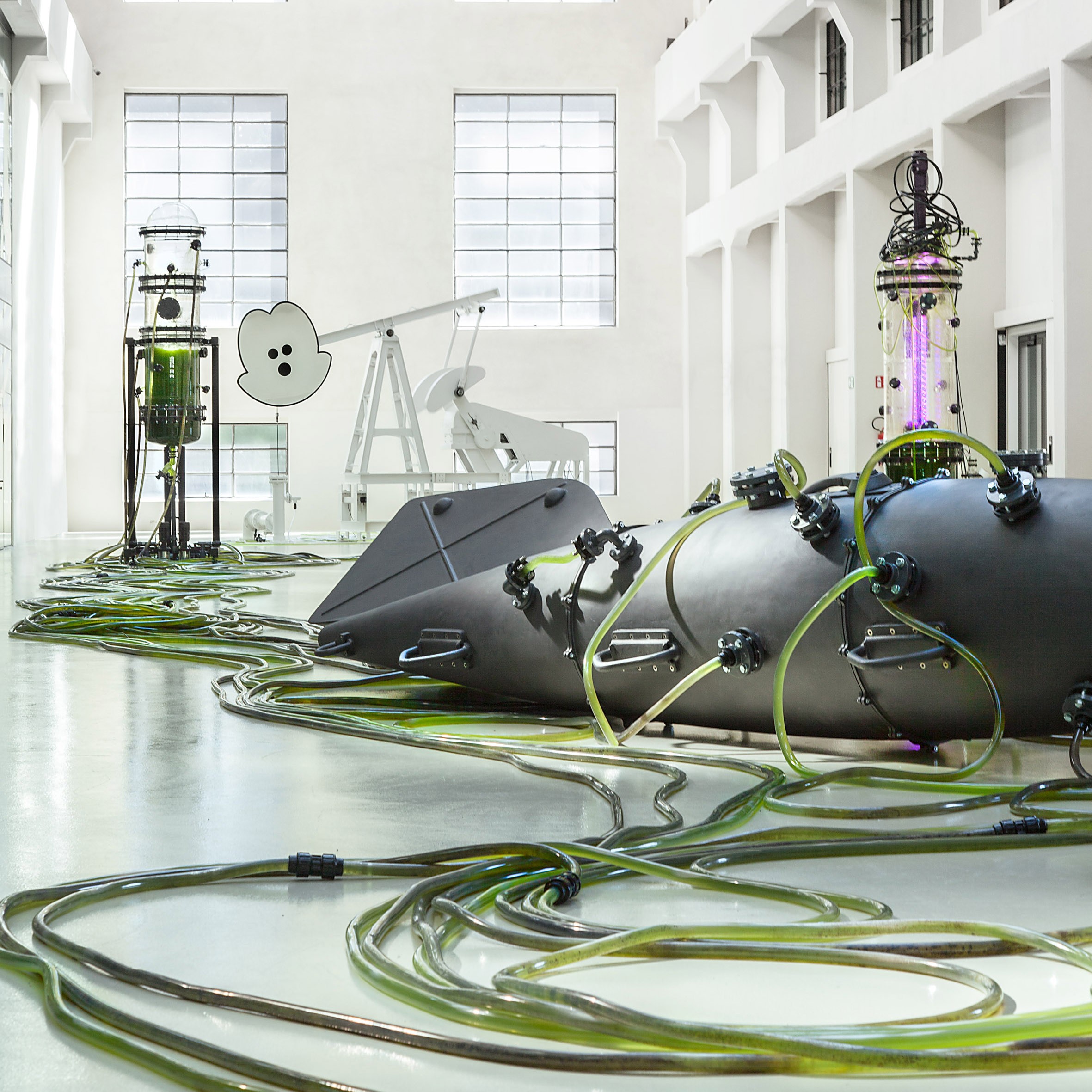
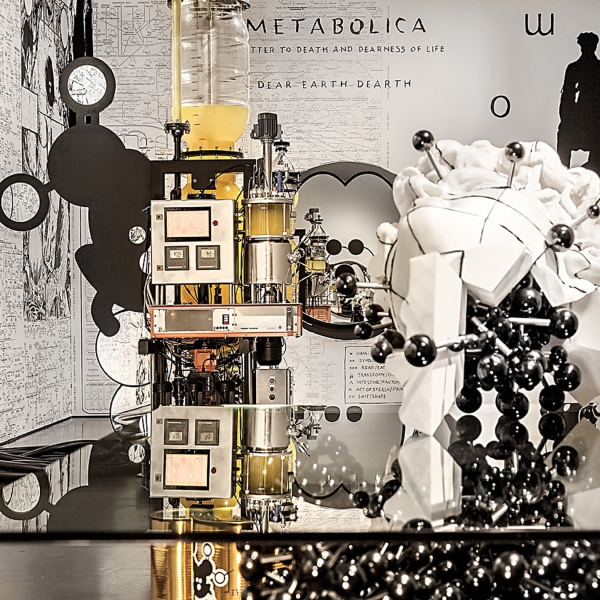
In his works, Thomas Feuerstein interweaves art, literature and philosophy with economics, politics,
digital media and biotechnology to create artistic narratives. His projects investigate the interplay of individuality and
sociality, explore ‘molecular sculptures’, formulate an aesthetic of entropy and develop a cybernetic ‘daimonology’ of cultural
processes.
The works include expansive installations, processual sculptures, drawings, radio plays, bio- and net art.
Central aspects are the linking of verbal, visual and material elements, the uncovering of latent superimpositions of fact
and fiction and the connection between art and science.
Feuerstein has established the artistic method of ‘conceptual
narration’ for this purpose. Thomas Feuerstein studied art history and philosophy and received his doctorate from the University
of Innsbruck in 1995. Among other things, he was co-editor of the journal Medien.Kunst.Passagen from 1992 and worked on research
commissions on art and architecture and art in electronic space. Since 1997, Feuerstein has been a lecturer and visiting professor
at universities and art academies, most recently Professor of Artistic Discourse at the Institute for Experimental Architecture/studio3
at the University of Innsbruck.
www.transarts.at