Exhibition
“Lill Tschudi – Franz Čižek. A delightful sort of game” opens tonight
Graphical Work of Lill
Tschudi on Show for the first Time – Relationship to Franz Čižek
10.10.2023
The new exhibition Lill Tschudi
– Franz Čižek. A delightful sort of game in the University Gallery of the University of Applied Arts Vienna will open
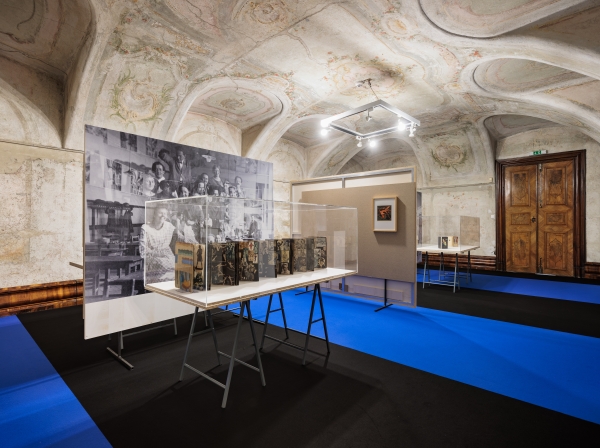
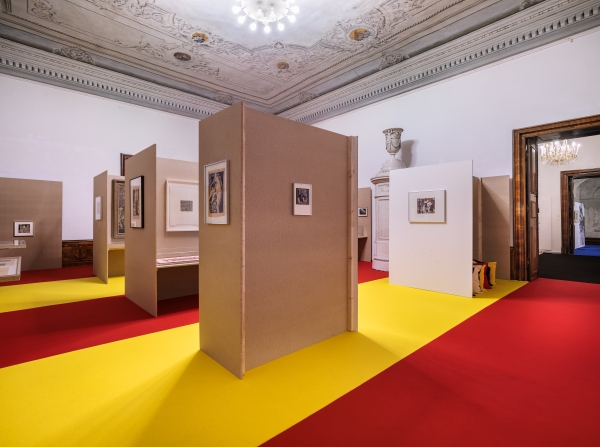
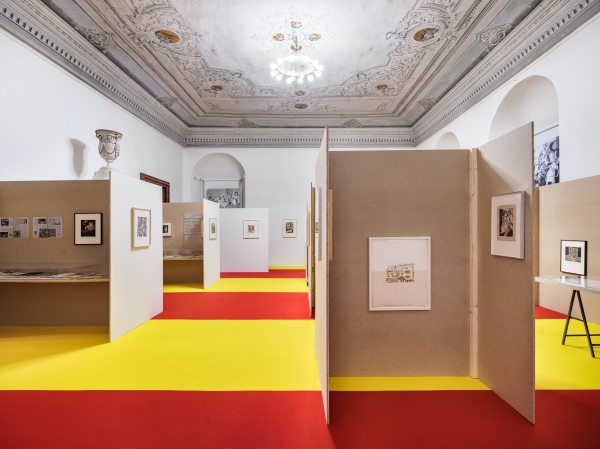
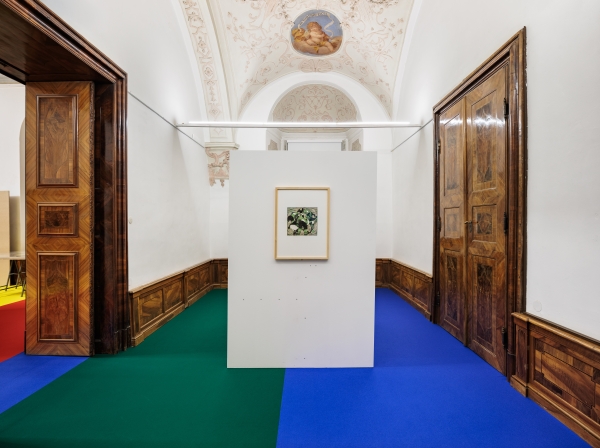
tonight in the city center of Vienna. Lill Tschudi – Franz Čižek. A delightful sort of game explores relationships
between artistic practice and teaching in the 20th century by bringing two figures in dialogue. The pivot of the
exhibition is the graphical work of Swiss artist Lill Tschudi (1911–2004), which is shown for the first time in Austria as
part of a cooperation between the Angewandte and the Graphische Sammlung ETH Zurich. This monographic perspective is furthermore
expanded by exploring the relationship of Tschudi’s works to selected holdings from the collection of the University of Applied
Arts Vienna that document the reform pedagogy of artist Franz Čižek (1865–1946).
The exhibition looks
at Tschudi and Čižek as exemplary artistic positions in interwar and postwar Europe, in whose work aspects of applied and
fine art as well as abstraction and figuration interrelate. Both Tschudi’s artistic works and Čižek’s pedagogy are linked
to the development of modern chromatic printing as well as to reform tendencies in society and pedagogy and the discovery
of “children's art” around 1900. Lill Tschudi studied linocut at London’s Grosvenor School of Modern Art in 1929 with the
British artist Claude Flight (1881–1955). Flight integrated Čižek’s approaches into his own teaching after a personal encounter
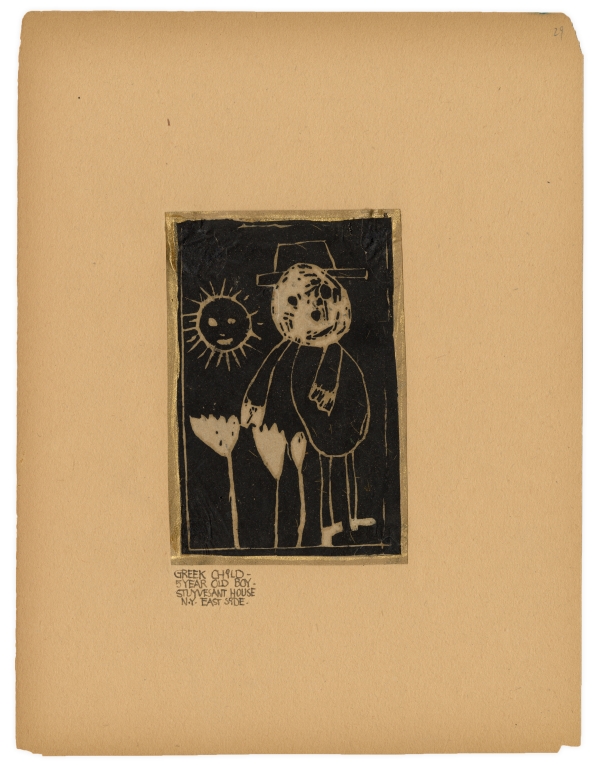
with him. In the introduction to his 1934 book, The Art and Craft of Lino Cutting and Printing, which he illustrated
with linocuts of children and works by his students alike, he quotes Čižek’s approach as a (new) model for artistic expression
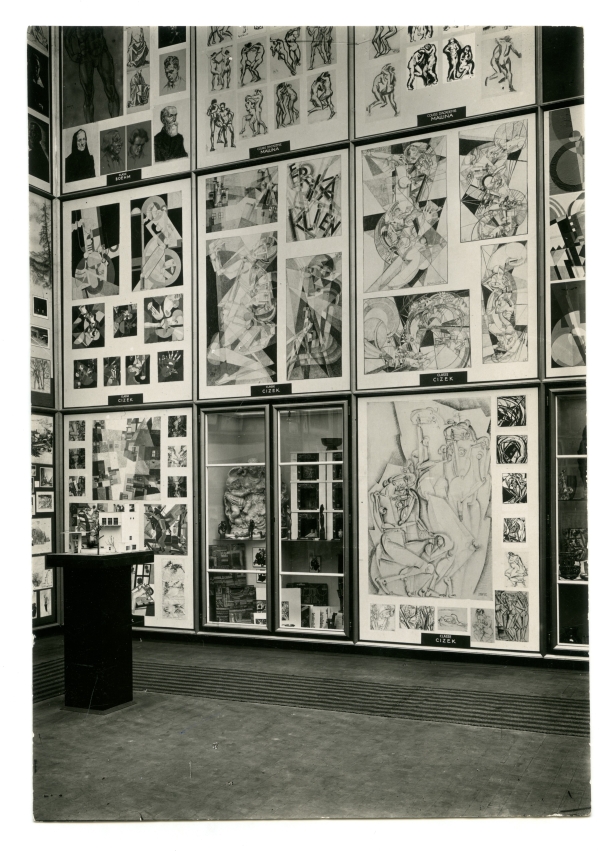
and “emotional organization” that is credited to the artistic activities of children. Čižek’s attitude and working methods
in his youth art class [Jugendkunstklasse], which was founded in 1903 and later incorporated into the Vienna School of Applied
Arts [Kunstgewerbeschule], gained early renown, especially in the Anglo-American world. Works by his students were shown worldwide
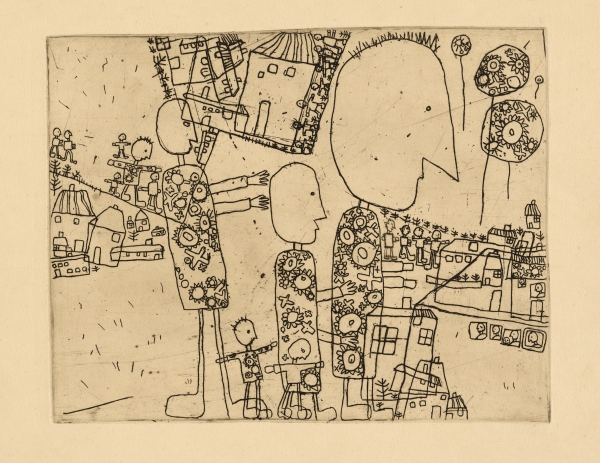
in numerous exhibitions. The class aimed at enabling children and young people to develop their own creativity in a wide variety
of techniques and materials, as well as in joint discussions.
Lill Tschudi – Franz Čižek. A delightful sort
of game explores the new status of children’s artistic work as a practice in its own right worthy of being exhibited.
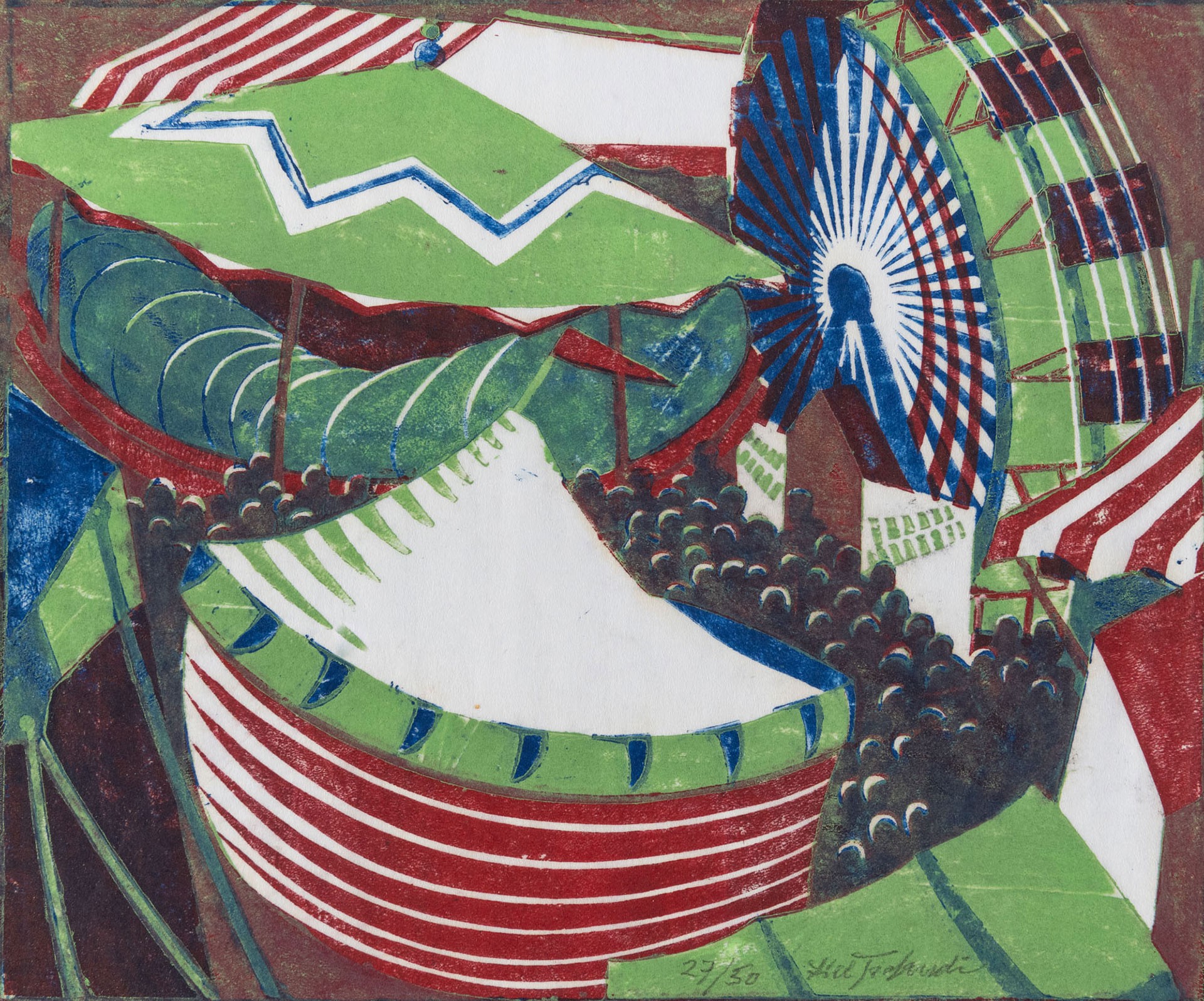
It looks at the functions of simple techniques such as linocut, as they were established and used in Čižek’s and Flight’s
teaching and in Tschudi’s artistic practice, in relationship to social transformations and artistic innovations. The exhibition
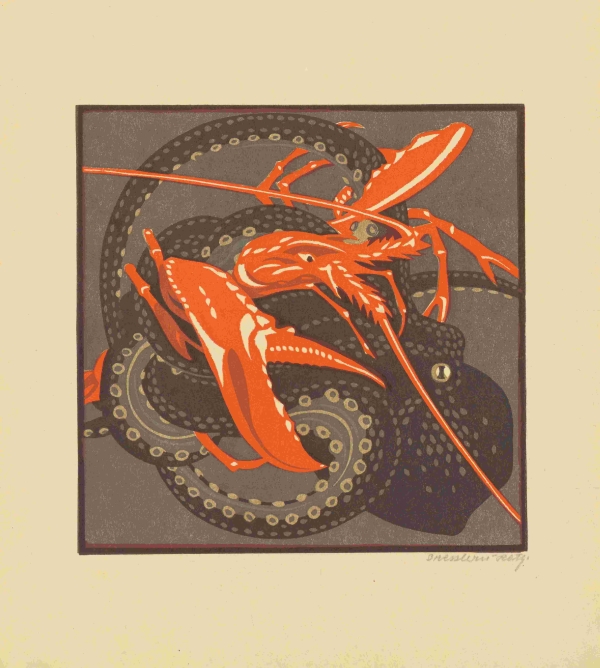
traces the role of published prints for Tschudi’s development – for example, those by Norbertine Bresslern-Roth (1891–1978),
whose depictions of animals she presumably became acquainted with through the Jugendrotkreuz magazine – and the relationship
of Čižek’s work to Viennese (social-democratic) educational reform. It follows possible “stylistic contagions” (Barbara Wittmann),
affinities and translations that were owed to the institutional environment of the youth art class. Čižek’s interest in “folk
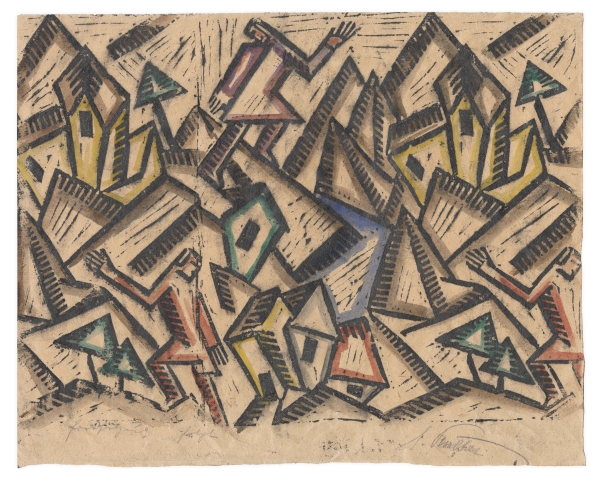
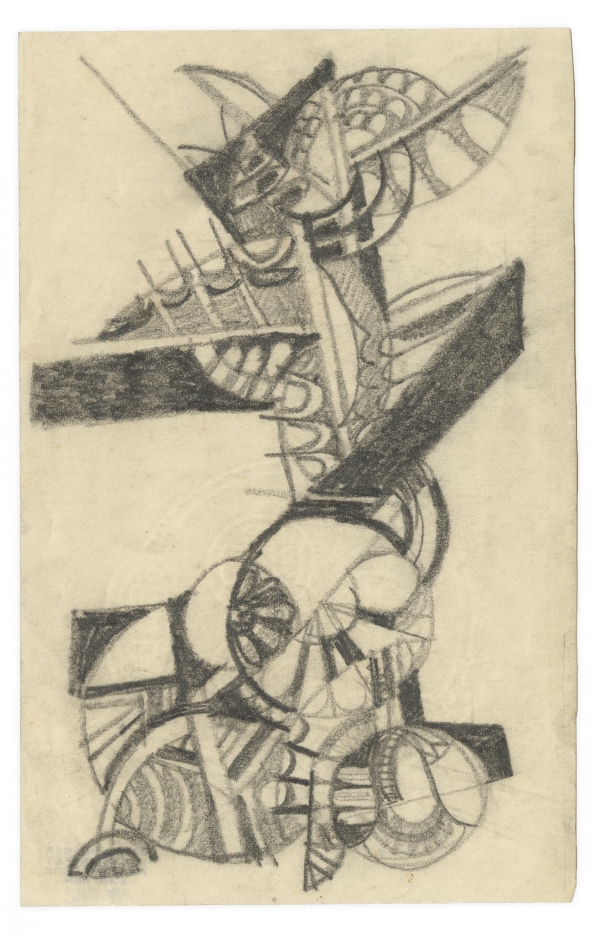
art” and the prints of the Wiener Werkstätte, for example, overlapped with his eclectic engagement with contemporary avantgarde
movements such as Futurism or Cubism, through which students in his courses for “Ornamental Form Theory” approached problems
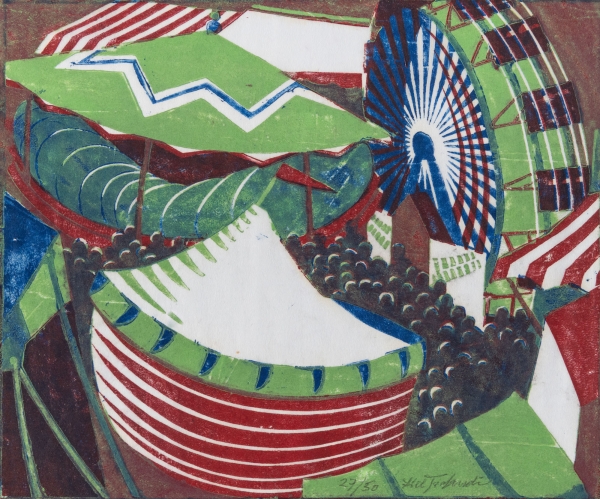
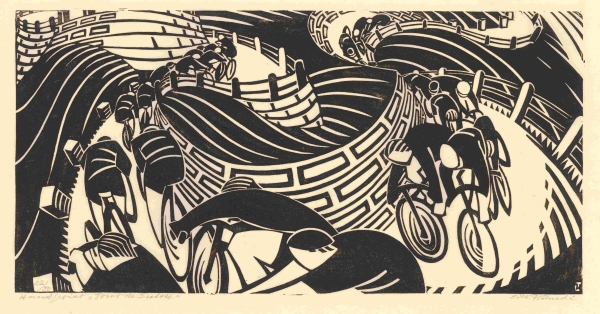
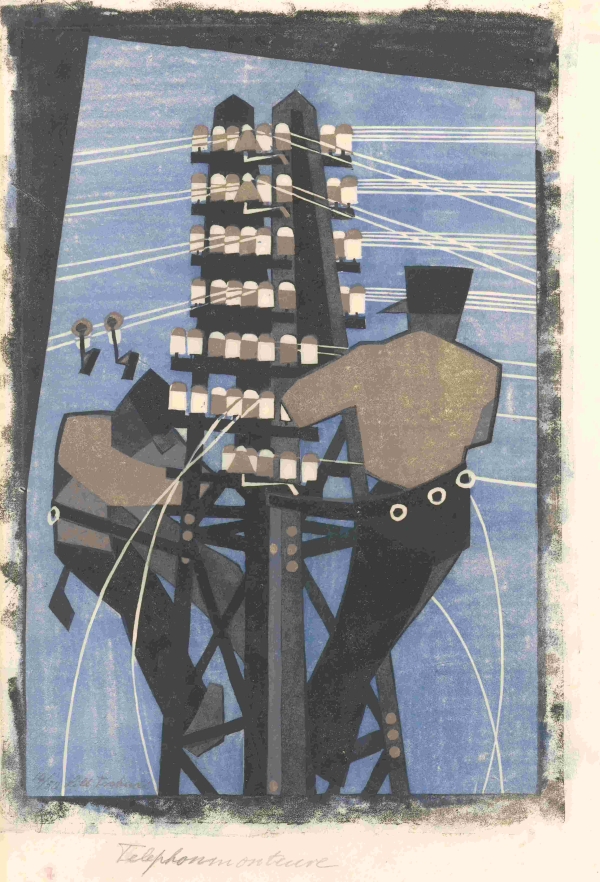
of movement, space, and temporality. In this regard, the exhibition also looks at the role of British Vorticism for the Grosvenor
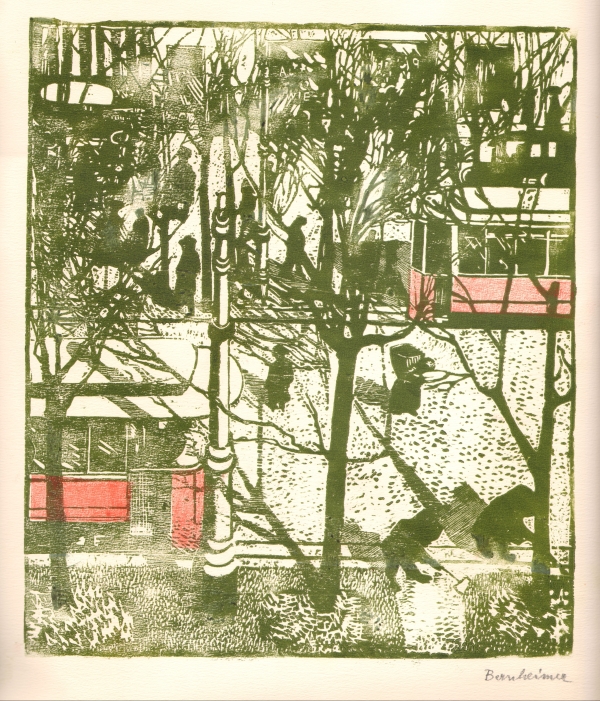
School and work of Lill Tschudi, whose 450 linocuts are characterized by dynamic representations of metropolitan everyday
scenes, sports and military subjects.
Lill Tschudi – Franz Čižek. A delightful sort of game aims at making
legible such personal, historical, and formal references between Lill Tschudi’s and Franz Čižek’s practices by means of playful
layerings and cross-sections as well as through questioning the relationship of both œuvres to international formations and
issues of modernity.
The exhibition relates to the show Lill Tschudi. The Excitement of the Linocut 1930–1950,
which was on view at the Graphische Sammlung ETH Zurich in 2021–22. An exhibition of the Collection of the University of Applied
Arts Vienna in cooperation with Graphische Sammlung ETH Zurich.
Time: Opening of the exhibition: 10. October
2023, 18 h
Exhibition duration: 11. October – 16. December 2023
Open from Wednesday – Saturday, 14
– 18 h, free entrance.
Venue: University Gallery of The Angewandte in the Heiligenkreuzerhof, 1., Schönlaterngasse
5
Curatorial Team: Stefanie Kitzberger and Robert Müller in cooperation with Alexandra Barcal (Graphische
Sammlung ETH Zürich) // Exhibition Management: Judith Burger, Laura Egger-Karlegger // Exhibition Design: Robert Müller //
Research and Booklet: Laura Egger-Karlegger, Stefanie Kitzberger, Eva Marie Klimpel, Ursula Prokorny, Robert Müller


![Lill Tschudi, Leporello, um 1935 - 1955 [undatiert], Graphische Sammlung ETH Zürich © Nachlass der Künstlerin](/jart/prj3/angewandte-2016/images/cache/2e2626bfeab900d25d775d233bcc0b45/0x6473AB6E69A37305E7A74BC575BAA176.jpeg)