The
University of Applied Arts Vienna sheds light on the beginnings of its art collection in the 1980s
17.09.2025
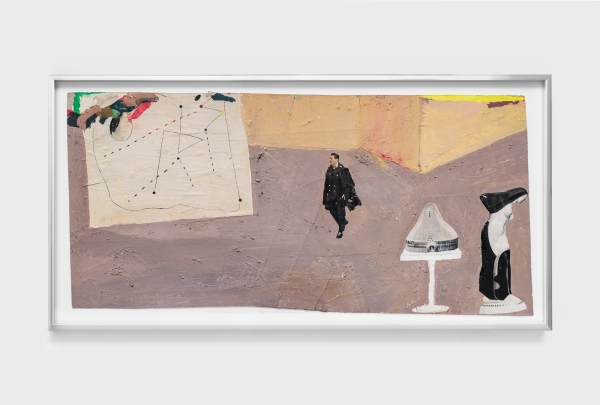
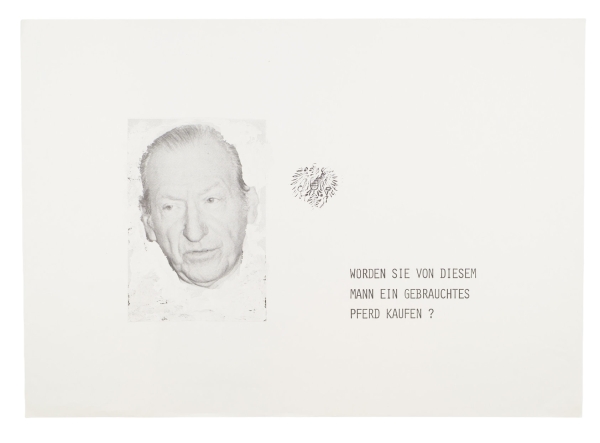
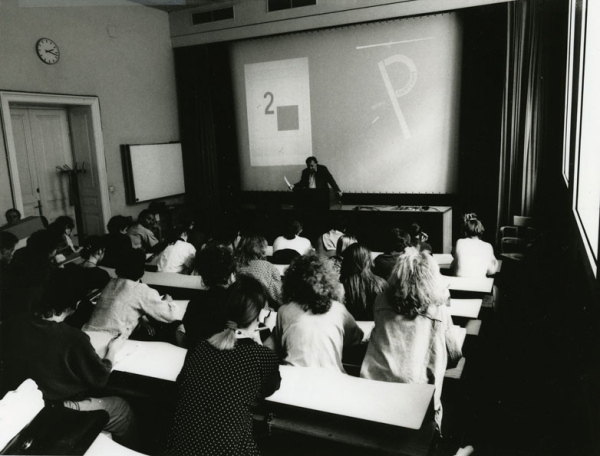
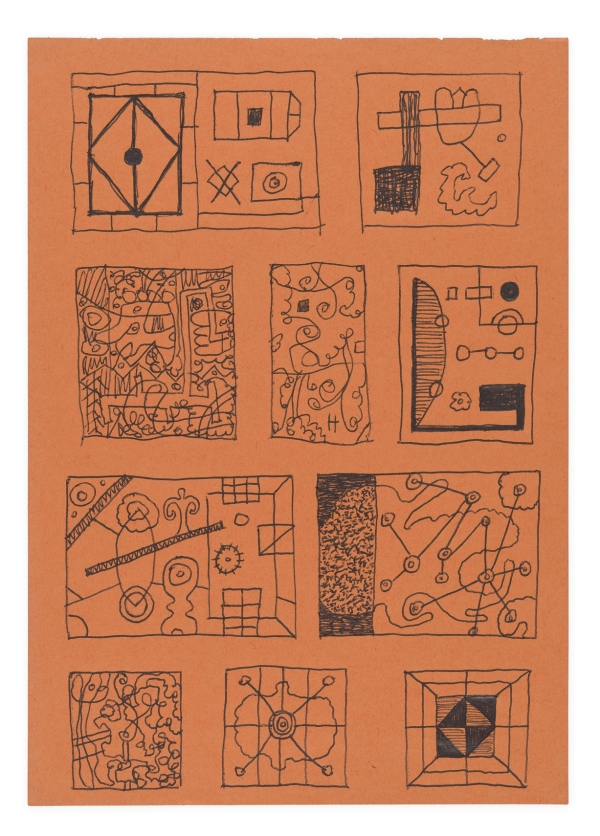
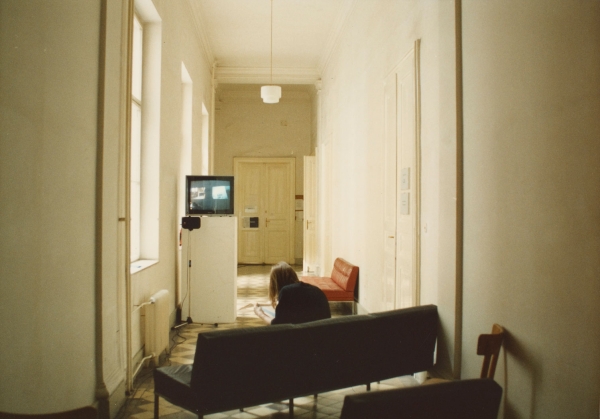
With the exhibition Fernheilung
(Distant Healing). The 1980s and Early 1990s Through a Distorted Lens, the Angewandte looks back at the artistic
scene in Vienna during the decade in which its collection was founded: works from the university's milieu at the time, documents
and selected loans are used to create a parcours that highlights important events in the art world, exhibitions, artistic
movements and discourses of the time in their context.
The practices of teachers and
students are placed in the context of the exhibition scene in Vienna as well as in the international trends of the time.
Founded in 1980 by Oswald Oberhuber, the rector at the time, the collection of the University of Applied Arts Vienna sought
from the outset to understand itself in its historical context. Although the collection is assembled according to whim, it
has a programmatic approach that is also made accessible to the public in exhibitions. Firstly, the programme aims to reorder
and re-evaluate the canon of the 20th century. It also deals with the reappraisal of National Socialism, which began very
late in Austria. Finally, it attempts to depict current events and developments in schools from an art-historical perspective.
The exhibition Fernheilung aims to build on this programme by taking up the logic of the collection: in the way
it describes the body of the collection, emphasises certain aspects, makes corrections and creates new contextualisations.
The Angewandte collection remains true to itself by changing. The exhibition thus creates an image of the collection that
is both historical and contemporary. Through different, conflicting, even contradictory registers of contemporaneity, this
image becomes a necessarily distorted reflection of each viewer's own perspective, values and ways of seeing.
Alongside
paradigmatic exhibitions and events such as Design is Invisible (Forum Design, Linz 1980), Signs, Floods, Signals (Galerie
Nächst St. Stephan, Vienna 1984), Dream and Reality. Vienna 1870–1930 (Künstlerhaus, Vienna 1985), Wittgenstein. The Game
of the Unspeakable (Secession, Vienna 1989) and the symposium The Aesthetic Field (Angewandte, Vienna 1992), developments
such as the canonisation of early Viennese Modernism and the late confrontation with the Nazi past are addressed. The exhibition
highlights the failed institutionalisation of practices of the 1960s and 1970s at the university, media art and Neo-Geo, as
well as their turn to institutional critique. It also traces the intergenerational battle zones and the long road to the internationalisation
of the art field in the context of the University of Applied Arts.
Today, the collection of the University of Applied
Arts Vienna comprises numerous objects from all areas of applied and fine arts of the 20th and 21st centuries, with a particular
focus on Viennese Modernism. These include prints, posters, furniture, textiles, photographs, ceramics, paintings, objects
and architectural models by Fred Adlmüller, Friedrich Berzeviczy-Pallavicini, Friedl Dicker-Brandeis, Josef Hoffmann, Oskar
Kokoschka, Anton Kolig, Maria Lassnig, Victor J. Papanek, Margarete Schütte-Lihotzky, Peter Weibel, the Wiener Werkstätte
and Viennese Kinetism, as well as Baroque and cottage industry textiles from historical teaching collections, among others.
Curated by Robert Müller in dialogue with Helmut Draxler
16. October 2025 – 31. January 2026
Press-Preview: 15 October 2025, 10 h
Opening: 15 October 2025, 18 h
University Gallery Heiligenkreuzerhof,
Schönlaterngasse 5 / Grashofgasse 3, 1010 Vienna
Staircase 8, 1st floor
Opening hours: Wednesday–Saturday,
2:00 p.m.–6:00 p.m. (closed on public holidays). Free entry