In the wake of the Anthropocene, the human and
social sciences have in recent decades experienced an important ontological-analytical shift of focus towards the non-human
beings that humans co-exist with and whom their livelihoods depend on. This turn has been crucial in re-distributing agencies
towards nonhumans, and in restoring a sensibility for other living beings and humans.
However, in this talk Schultz
argues that getting closer to non-humans is not the only analytical strategy we need if we wish to face our times crisis of
sensibilities. Instead, based on his book Land Sickness, Schultz argues that we also need descriptions of how the
existential conditions of the human being has transformed in the Anthropocene, how the human has transformed into another
kind of being, one leaving behind a set of destructive traces that is slowly but certainly destroying its own species’ conditions
of subsistence.
Presented by: Roswitha Schuller
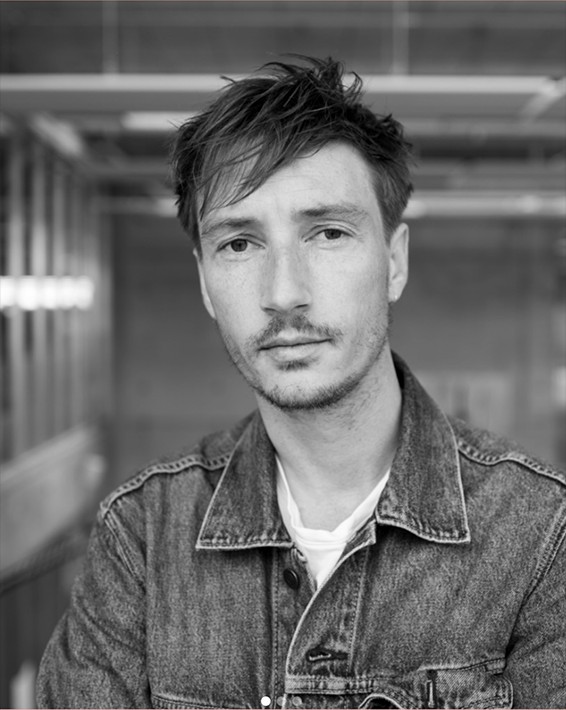
Nikolaj Schultz
In recent years, Danish sociologist Nikolaj Schultz
(1990), PhD Fellow at Department of Sociology, University of Copenhagen, has emerged as an influential voice in social theory
and ecological thinking. Schultz was a close collaborator of late French philosopher Bruno Latour (1947-2022) in the years
before his passing. In 2022, Schultz and Latour co-authored On the Emergence of an Ecological Class. A Memo (translated
from French by Julie Rose, Polity Books, 2023), a short text on how to construct from below a strong political subject ready
to fight for the habitability of the planet in the wake of global climate change.
A year after its publication, the book
was translated in more than a dozen languages and quickly became a point of inspiration for political actors such as the Green
Party in France (EELV) and the German Climate Movement (in German: Zur Entstehung einer ökologischen Klasse, Suhrkamp
2022). Later the same year, Schultz published Land Sickness (Polity Books, 2023), currently translated into eight languages,
a hybrid text that he calls an “auto-etnografictive essay” on the sociological and existential questions that the Anthropocene
force us to pose. It is available in German as Landkrank (translated by Michael Bischoff, published by Suhrkamp 2024).